Free Bit Co Explained and Better Mining Options
You type “free bit co” into a search engine expecting a coin, mining app, or wallet. Instead, the results lead you to a Japanese telecom company, corporate history pages, and investor information. That mismatch is more than an annoying search problem. In crypto, a vague name can send you to the wrong website, a fake social account, or an unverified platform before you've confirmed what the project is.
The right response isn't to force the search results to fit your expectations. Treat the keyword as a research clue, identify the entity behind it, and then apply a strict verification process to any cryptocurrency or mining project you're considering. If your real goal is low-power participation rather than a specific company, start by learning how cloud mining models work through this guide to free cloud mining.
Table of Contents
- Navigating the Confusion Behind Vague Crypto Searches
- What the Search Results Actually Reveal
- A Practical Framework for Verifying Crypto Legitimacy
- The Hidden Environmental Costs of Traditional Mining
- Comparing Heavy ASIC Operations to Eco-Friendly Models
- Getting Started with Transparent and Sustainable Networks
- Final Thoughts on Responsible Crypto Participation
Navigating the Confusion Behind Vague Crypto Searches
A newcomer usually reaches this point in a familiar way. They hear about a new mining project from a post, remember only part of its name, and search the phrase exactly as it sounded. The first page looks authoritative, so they assume the result must be the project they wanted. Then a corporate telecom website appears, filled with business descriptions that have nothing to do with wallets, block rewards, or mining software.
That's where many people make their first mistake. They treat a matching word as proof of identity. It isn't. Names overlap, abbreviations get clipped, domains change, and social posts often omit the details needed to distinguish a company from a cryptocurrency. A search engine can identify a popular phrase without understanding the user's intended meaning.
Search intent is a security issue
Crypto projects create extra risk because the wrong result can lead to an irreversible action. You might download software from an impersonator, connect a wallet to a malicious site, or send funds to an address that has no connection to the project you intended to investigate.
Use an investigator's mindset:
- Separate the entities: Determine whether the result is a company, token, blockchain, mining service, exchange, or unrelated brand.
- Check the official domain: Look for consistent ownership, contact information, documentation, and links to verifiable code or network tools.
- Search the exact project context: Add terms such as “whitepaper,” “GitHub,” “block explorer,” or “mining algorithm,” but treat those results as leads, not proof.
- Ignore urgency: A countdown, guaranteed-return language, or pressure to deposit immediately is a warning sign, not evidence of legitimacy.
Practical rule: If you can't explain what an entity does in one clear sentence, you're not ready to connect a wallet or send money.
The phrase free bit co therefore deserves disambiguation before it deserves attention as a crypto opportunity. Once you know what the search results represent, you can stop chasing a mistaken identity and evaluate actual mining networks on their code, activity, security model, and energy demands.
What the Search Results Actually Reveal
Search “free bit co” and you may expect a coin, mining network, or blockchain project. The leading result points instead to FreeBit Co., Ltd., a Japanese public telecommunications and internet services company. Its name includes “bit,” but that wording alone does not establish a connection to cryptocurrency mining.

FreeBit's corporate history says the business was founded in May 2000 in Shibuya, Tokyo, originally as FreeBit.com Co., Ltd., to provide internet business support services. The company changed its name to FreeBit Co., Ltd. in December 2002. Those milestones appear in its official corporate history.
That record identifies an established telecom business, not a newly launched decentralized mining network. A genuine crypto project should offer a distinct blockchain identity, explain its consensus mechanism, document wallet use, and provide technical evidence such as public code, mining details, or a block explorer. Corporate involvement in digital services or Web3 can exist without the company being a coin, protocol, or mining platform.
Why the mismatch matters
FreeBit's corporate information describes internet-related operations such as ISP, MVNO, cloud, and other business activities. It also places Web3 within a broader corporate portfolio. That context matters. A Web3 initiative inside a telecom company is not automatically a permissionless cryptocurrency network.
Use these conclusions to filter the search results:
- FreeBit Co., Ltd. is a Japanese telecom and internet services company.
- The result does not prove that FreeBit operates a cryptocurrency called Free Bit.
- Corporate Web3 activity does not equal a decentralized coin or mining protocol.
- A matching name is not technical verification.
Treat the result as a disambiguation signal, not an investment signal. Confirm the project's exact name, official domain, network, and technical documentation before downloading software, connecting a wallet, or sending funds. If those details point elsewhere, investigate that project on its own evidence rather than associating it with FreeBit.
A Practical Framework for Verifying Crypto Legitimacy
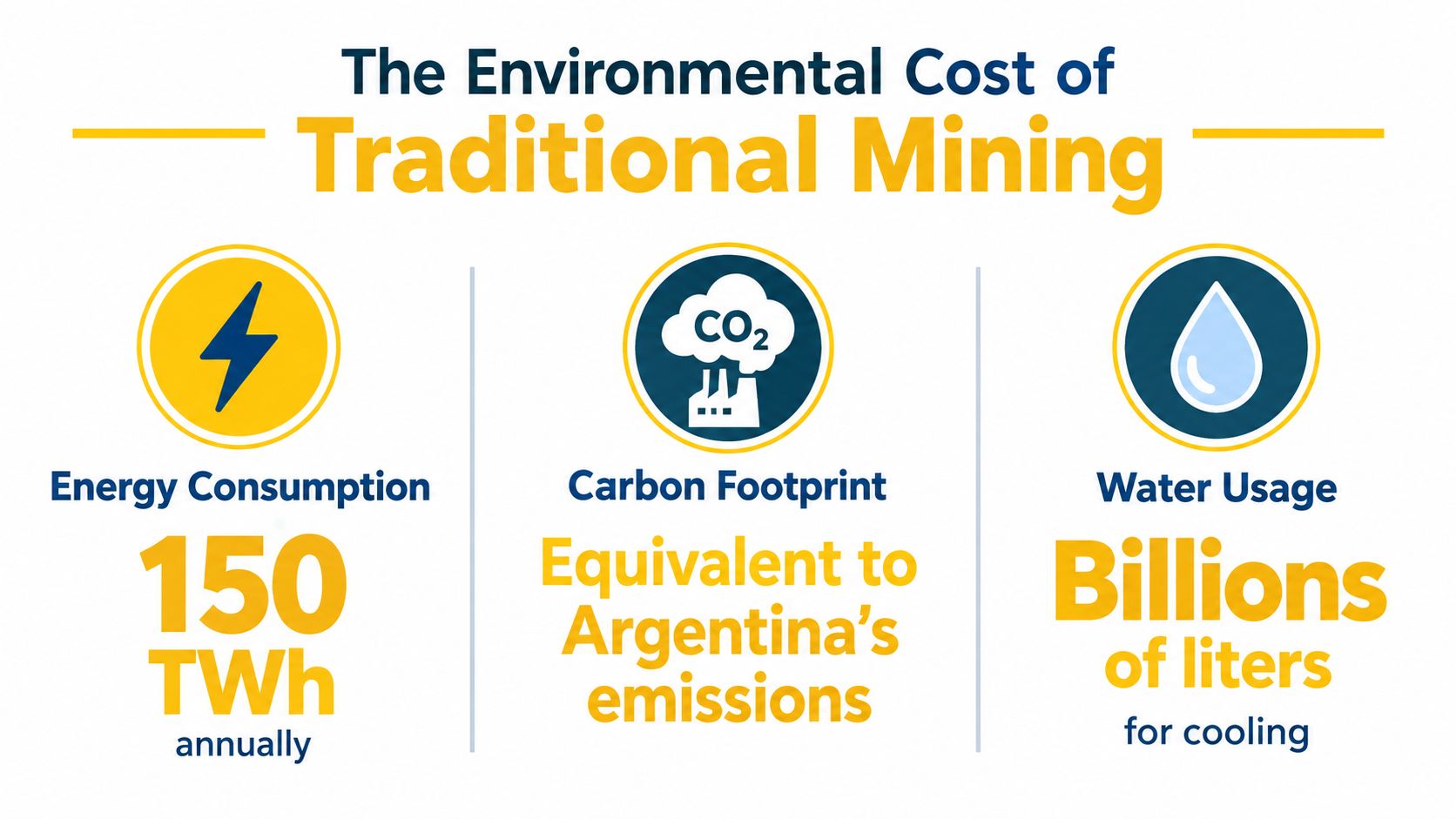
A credible project should survive scrutiny from several independent angles. Marketing pages are easy to produce. Public code, observable network activity, coherent documentation, and accountable development are harder to fake consistently.
Start with identity and documentation
First, write down the project's official name, domain, ticker, network, and stated purpose. Confirm that these identifiers remain consistent across its website, documentation, social channels, wallet downloads, and community spaces. If one page uses a different ticker or sends you to an unrelated domain, stop and investigate before installing anything.
Read the technical documentation for specifics. It should explain the consensus model, mining or validation process, wallet behavior, reward mechanics, and known risks. Be suspicious of pages that promise easy income but avoid explaining how the network reaches agreement or how users can verify transactions.
Inspect code and network evidence
Next, locate the public source repository. Check whether the code is available, whether the project documents its license, and whether contributors can inspect the history of changes. A repository alone doesn't prove safety, but a missing repository makes independent review much harder. Guidance on assessing open-source transparency is available in this open-source software audit guide.
Then use a public block explorer. Confirm that blocks, transactions, wallet addresses, and network activity match the project's documentation. Don't rely on screenshots supplied by the project when you can inspect the chain directly. A functioning explorer gives you a way to test claims rather than accept them.
Evaluate people, operations, and incentives
Look for identifiable maintainers, sustained technical discussion, release notes, issue tracking, and answers to difficult questions. Anonymous development isn't automatically fraudulent, but it raises the standard of proof. The community should discuss bugs, upgrades, mining behavior, and security tradeoffs, not only price speculation.
Before committing hardware or funds, test the setup with minimal exposure:
- Download only from the official project domain or verified repository.
- Confirm file signatures or published checksums when available.
- Use a separate wallet for experimentation.
- Run software without granting unnecessary permissions.
- Verify that received rewards appear on-chain.
- Record the electricity and hardware costs before scaling.
A project that can't answer basic questions about code, wallets, network activity, or reward calculation doesn't deserve your trust. Treat transparency as a minimum requirement, not a bonus feature.
The Hidden Environmental Costs of Traditional Mining
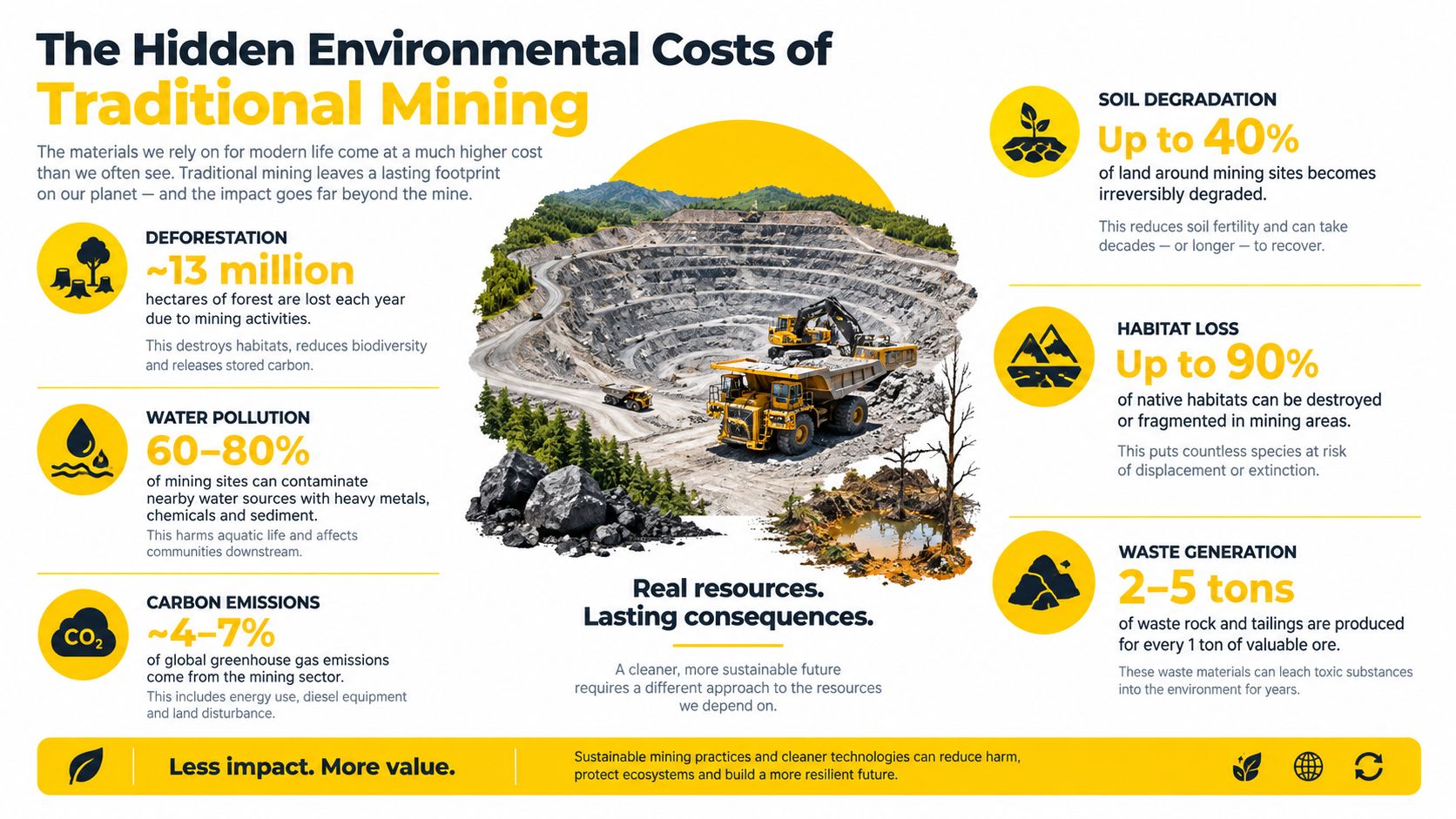
A miner can install a more efficient machine and still contribute to a larger energy footprint. Proof-of-work mining consumes electricity with every hash attempt, including attempts that do not produce a block. Its security model links block competition to electricity prices, hardware efficiency, network difficulty, and the total equipment operators deploy.
Newer hardware improves energy use per unit of computation. That improvement does not guarantee lower network consumption. Cheaper operation can attract more miners, difficulty adjustment can increase the work needed to find blocks, and favorable market conditions can encourage operators to expand.
Research on proof-of-work energy use explains this rebound effect. Energy demand can respond strongly to cryptocurrency prices and can grow without a clear theoretical upper bound. ASIC improvements may therefore increase competition without creating a proportional fall in total electricity use, according to this academic analysis of cryptocurrency energy consumption.
Hardware efficiency doesn't settle the question
Bitcoin mining offers a useful benchmark for SHA-256 ASIC operations. One measured configuration produced 504 GH/s at 500 W, approximately 1 GH/J. That result shows the advantage of specialized hardware over general-purpose devices, as reported in this technical study of Bitcoin mining hardware and power demand.
The same study estimated Bitcoin mining power demand at roughly 1.3 to 14.8 GW during a peak period and annual consumption at 15.47 to 50.24 TWh in mid-2018. These ranges show the scale of the system and why SHA-256 economics cannot be judged from one machine's efficiency rating.
The footprint extends beyond the miner itself. Cooling equipment, manufacturing, facility construction, electricity generation, replacement cycles, and end-of-life disposal all affect environmental costs. Operators evaluating facilities and equipment should review practical guidance on Reworx Recycling Georgia data centers.
Measure the full cost before treating mining as a responsible activity.
Proof of work can provide meaningful network security, but its electricity demand deserves deliberate scrutiny. If your aim is participation rather than industrial-scale hash competition, prioritize networks built around lower-power computation. The ecological impacts of mining provide useful context for assessing alternatives such as Cascoin, especially when energy use and hardware requirements matter.
Comparing Heavy ASIC Operations to Eco-Friendly Models
Choose the mining model by its workload, costs, and risks. A SHA-256 ASIC performs specialized hashing at high speed, while a CPU-friendly or gamified model emphasizes accessibility, lighter computation, and user participation. The difference affects entry cost, technical complexity, heat output, and the role each participant plays in the network.
A Bitcoin mining configuration recorded 504 GH/s at 500 W, or approximately 1 GH/J, as detailed in the technical study cited above. Use that figure to understand specialized hardware, not to predict your own results. Profitability still depends on electricity pricing, network difficulty, uptime, pool fees, hardware cost, and coin valuation.
| Feature | Traditional SHA-256 ASIC | Eco-Friendly Gamified CPU |
|---|---|---|
| Core activity | Repeated SHA-256 hashing | Lightweight client activity built around a gamified participation model |
| Hardware profile | Specialized ASIC equipment | General-purpose CPU or ordinary computer |
| Entry barrier | Higher equipment, noise, heat, and electrical planning requirements | More accessible for newcomers and small operators |
| Energy considerations | Continuous power draw and facility cooling can become major costs | Designed for lower-power participation, though users still need to measure their own consumption |
| Technical skill | Hardware setup, pool configuration, thermal management, and operational monitoring | Wallet setup, client installation, network configuration, and basic system monitoring |
| Best fit | Operators with suitable power economics and mining experience | Users seeking an approachable, lower-power way to participate |
| Main risk | Capital exposure and sensitivity to difficulty and electricity costs | Unproven reward assumptions, software security, and network adoption |
Choose based on your actual objective
ASIC mining belongs to operators who understand the full operating economics and can accept hardware-specific risk. A reward calculator is not enough. Confirm the electricity rate, expected uptime, cooling requirements, resale prospects, and how network difficulty can change before buying equipment.
A gamified CPU model has a different purpose. It can make participation easier by replacing the constant hash competition with a lightweight client experience. Treat the environmental benefit as a design goal, not a safety guarantee. Verify the code, inspect the reward rules, monitor processor load, and confirm that reported activity corresponds to a functioning network.
Decision test: Pick the model you can verify and operate responsibly, not the one with the loudest reward promise.
For beginners, start with wallet security and on-chain verification. Run a low-power client only after checking the project's documentation and network activity. Consider specialized hardware later, once you understand electricity, maintenance, cooling, and reward conditions. This order separates technical novelty from sustainable participation and makes alternatives such as Cascoin easier to assess on their actual design and operating demands.
Getting Started with Transparent and Sustainable Networks
A responsible mining setup begins with verification, not installation. Choose a project that publishes its code, documents its network, provides a wallet through a controlled distribution path, and lets participants inspect activity through a block explorer. Those features don't guarantee success, but they give you the tools to test the project's claims.
Follow a controlled setup
Start with the official documentation and identify the supported operating systems, wallet process, mining options, and pool instructions. Download the wallet and client only from links maintained by the project. Before creating a funded wallet, test the software with a new address and keep meaningful holdings separate from experimental activity.
Next, confirm the network connection. A public mining pool should publish enough information for you to understand how workers, shares, and payouts operate. A block explorer should allow you to follow transactions and verify that rewards are recorded on-chain. If the software reports earnings but you can't locate corresponding network activity, treat that discrepancy as a serious warning.
Match the mining mode to your equipment
Transparent networks can support multiple participation paths, but each path needs separate evaluation:
- Gamified lightweight mining: Suitable for users who want a more accessible client experience and lower power demand.
- CPU-friendly mining: A practical entry point for ordinary computers, provided the processor load and heat remain acceptable.
- SHA-256 mining: Better suited to experienced ASIC operators who already understand hardware, electricity, cooling, and pool economics.
Measure your own machine rather than trusting a generic claim. Check processor utilization, system temperature, electricity draw, and payout records over time. Sustainable participation means knowing what your hardware consumes and deciding whether the contribution is worthwhile.
For broader context on how sustainable technology projects approach efficiency and responsible infrastructure, you can browse sustainable tech while comparing networks and tools.
Participate in the public process
Join the project's documented community channels and read technical discussions before asking for help. Look for issue reports, release announcements, bug fixes, and conversations where participants challenge assumptions. Open discussion is more valuable than a large follower count because it shows whether users can inspect and question the system.
Keep your own records. Save the wallet version, client settings, pool configuration, electricity estimate, and transaction identifiers. This habit turns mining from guesswork into an auditable experiment.
Final Thoughts on Responsible Crypto Participation
A search for free bit co can send a newcomer toward the wrong wallet, miner, or download. Treat the phrase as an identity check before treating it as a crypto opportunity. Confirm the entity first, inspect the technical system second, then decide whether participation fits your resources and risk tolerance.
FreeBit Co., Ltd. is the Japanese telecom and internet services company that dominates the relevant search results. Its history includes a May 2000 founding in Shibuya, Tokyo under the name FreeBit.com Co., Ltd., followed by a December 2002 change to FreeBit Co., Ltd. The company's official history documents those milestones. Corporate Web3 activity remains separate from a dedicated decentralized cryptocurrency network, so do not infer a coin, chain, or mining product from the company name alone.
Use this verification checklist:
- Identity: Confirm the legal or project entity, official domain, ticker, and stated purpose.
- Code: Check the public repository, license, release history, and signs of ongoing maintenance.
- Chain: Inspect a block explorer for blocks, transactions, wallet addresses, and rewards.
- Security: Download only from verified channels, isolate test funds, and reject unnecessary permissions.
- Economics: Calculate electricity, hardware, cooling, fees, and volatility before expanding.
- Sustainability: Choose resource demands that match your equipment and values.
Proof-of-work participation connects electricity, difficulty, hardware scale, and market conditions. Specialized ASICs can improve hashes per joule, yet that efficiency does not prove that total network consumption is low. Lower-power models still require code review, operational testing, and realistic expectations.
Keep monitoring wallet releases, network changes, and maintenance notices through reliable channels. If you are comparing tools that keep software current, these alternatives for live updates offer useful context for evaluating delivery and update practices. Crypto carries technical and market risk. No legitimate project removes the need for independent judgment or guarantees profits.
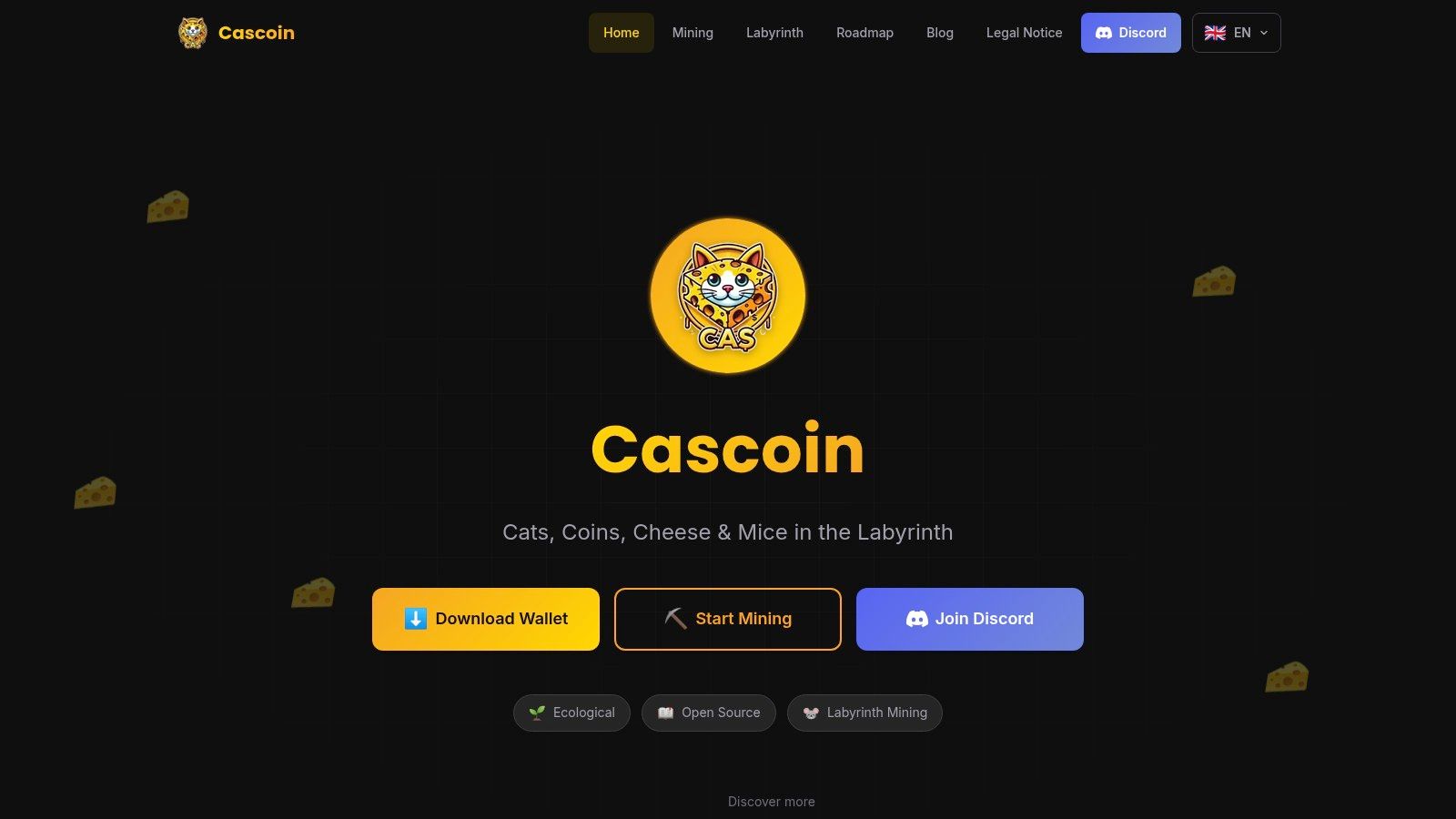
Cascoin offers an open-source, community-driven network with Labyrinth Mining, CPU-friendly MinotaurX, and SHA-256 options for different participants. To assess a lower-power, gamified alternative, review Cascoin, read its documentation, inspect the code, and verify on-chain activity before committing funds or hardware.