Wallets with Locks: A Practical Security Guide
You're standing at an airport security line with a backpack full of cards, cash, keys, and perhaps a hardware wallet. The bag is close to you, but not always in sight. A lock can make a quick theft harder, yet it can't make lost property magically return or protect a recovery phrase you've exposed elsewhere.
That distinction matters because wallets with locks belong to one broad security family. A combination-zip travel wallet protects physical valuables from a hurried hand. A PIN-protected hardware wallet protects digital signing authority from someone holding the device. Their mechanisms differ, but their questions are similar: who is the attacker, what can they reach, and how much recovery friction can you tolerate?
Table of Contents
- A Lost Bag in Lisbon and the Case for a Lockable Wallet
- What a Lock on a Wallet Actually Protects You From
- Physical Lock Wallets and How Each Mechanism Works
- Digital Lock Wallets From PINs to Seed Encryption
- Physical Versus Digital Lock Wallets Compared
- Matching Lock Wallets to Travelers, Everyday Users, and Crypto Holders
- Maintenance and Habits That Keep Lock Wallets Effective
- Why More Locks Is Not Always More Security
A Lost Bag in Lisbon and the Case for a Lockable Wallet
The backpack disappeared during a busy afternoon at a Lisbon café. You'd set it beside your chair while checking a map, then turned toward the street for only a moment. By the time you noticed, the thief had a bag containing a charger, notebook, cards, cash, and a travel wallet with a combination-locked main compartment.
The lock didn't identify the thief or recover the backpack. It did something narrower and useful. Someone who opened the bag quickly couldn't immediately slide out the cards and cash sealed behind the zipper. That delay created time to notice the loss, contact the card issuer, and retrace the route. A lock buys reaction time, not guaranteed recovery.
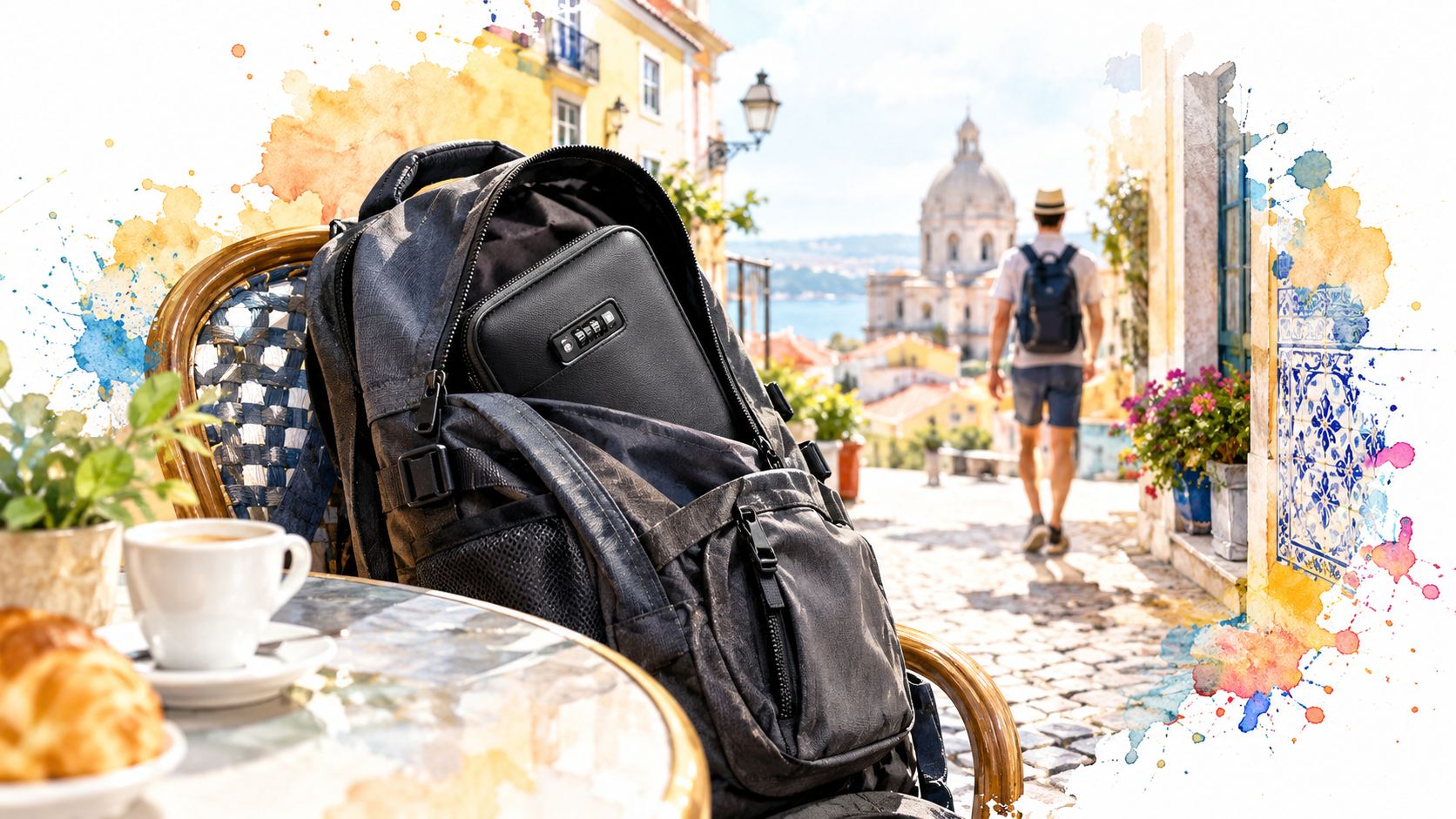
The same logic applies when you protect your wallet in a tote. A secure bag and a lockable inner wallet work as separate barriers. The bag slows access, while the wallet protects the contents if someone gets inside. Neither replaces keeping the bag close, limiting what you carry, or canceling payment cards promptly.
A physical wallet and a crypto hardware wallet are often discussed as unrelated products. They're better understood as siblings with different contents. One holds objects you can touch. The other holds, or helps protect, secrets that authorize digital transactions.
The rest of this guide won't name one universal winner. It will match each mechanism to the situation it handles best, then show where the same mechanism creates friction or fails.
What a Lock on a Wallet Actually Protects You From
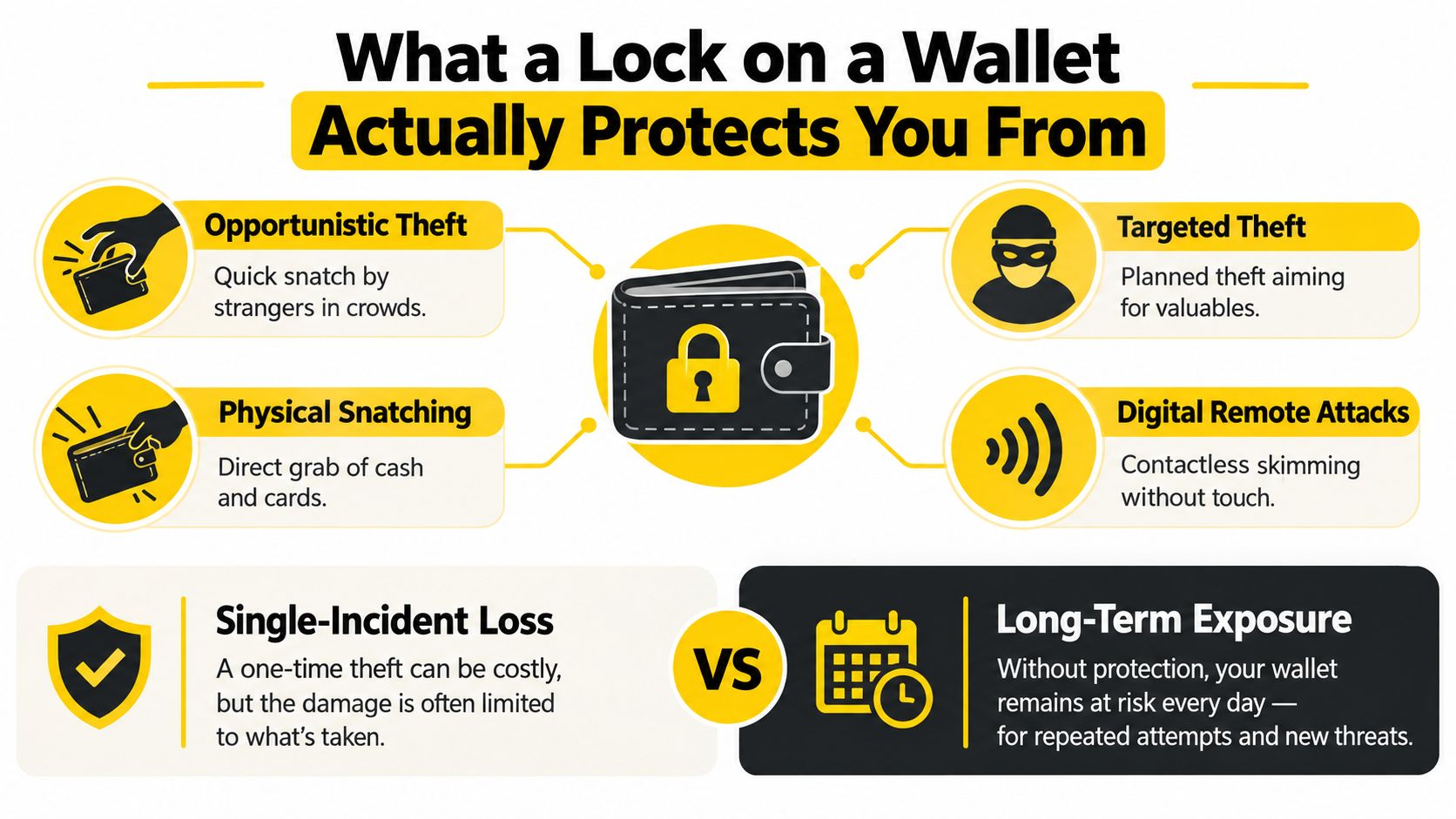
Start with the attacker, not the product label. A lock works against a defined capability, such as a stranger who can grab a wallet and spend a few seconds opening it, a pickpocket working in a crowd, or a person who has obtained a device but not its authentication code.
Opportunistic theft is fast and low-planning. The attacker wants an accessible item and may abandon it when access becomes inconvenient. A zipper lock, clip, or PIN can help here. Targeted theft is different. Someone who specifically wants your cards, cash, or crypto device may bring tools, observe your habits, or exploit your recovery process. A small lock remains a delay, not a complete defense.
Physical snatching involves direct access to the wallet. Digital remote attacks may involve malware, malicious applications, deceptive approval requests, or attempts to extract secrets from a stolen device. Contactless skimming belongs in its own category. An RFID-blocking layer can limit radio communication, but it doesn't stop a thief from taking the wallet or copying information through another route.
Threat-model rule: Ask what the attacker can physically touch, observe, guess, or control before deciding whether a lock adds meaningful protection.
Two timelines also matter. Single-incident loss means a thief gets the wallet once. Long-term exposure means a secret, such as a crypto recovery phrase, remains available for later use. A physical lock mainly delays the first event. Digital controls must also prevent future signing or recovery after the device disappears.
For readers comparing contactless protections, leather RFID blocking explained is useful because it separates material claims from the broader question of what RFID protection can and can't address.
Authentication, tamper evidence, and recovery friction connect both product families. A combination is an authentication factor. A sealed case can reveal tampering. A seed backup or card replacement process determines what happens after loss.
Physical Lock Wallets and How Each Mechanism Works
Physical locking systems don't all resist the same attack. A useful review asks whether the mechanism slows a casual bag dip, blocks radio communication, or merely keeps documents organized.
Combination zippers
A combination zipper joins two pulls and requires the correct code before they move. It suits airports, crowded transit, and shared accommodation where a stranger may get brief access to a bag. The value is delay. A passerby can't unzip the compartment in one motion.
The weakness is operational. A forgotten code can lock out the owner, while a visible dial can reveal repeated entry patterns. Zipper teeth and pulls can also fail before the combination mechanism does. A traveler carrying passports and spare cards in one locked compartment benefits when the code remains memorable and the wallet stays inside a larger bag.
Padlock loops and small locks
A zippered wallet with a padlock loop makes the barrier familiar and replaceable. You can use a small combination lock or keyed padlock, depending on what you value more, fewer things to remember or no key dependency.
This arrangement works against casual rummaging in a hotel room or shared office. It's less convincing against a determined thief who can cut the zipper tape, damage the loop, or take the entire bag. The lock may also become an awkward object in a pocket, and a loose key can create its own loss problem.
Clip-and-latch cases
Hard cases with a clasp or latch protect cards, coins, and small documents from pressure and casual opening. They're useful when the wallet travels in luggage or a structured compartment rather than a tight trouser pocket.
The failure mode is concentrated around the hardware. A clipped clasp, bent hinge, or weakened spring can leave the case shut poorly or make it difficult to open. Test the latch with the case empty and loaded. A case that closes securely but releases only after several attempts isn't practical during a border check.
Interior locking compartments
Some travel organizers place a lockable pocket inside a larger wallet. This design separates frequently used items from emergency documents. You can reach a transit card without exposing a passport or backup payment card.
The protection depends on the outer organizer. If the entire wallet is removed, the inner compartment still faces a theft attempt. Its strongest use case is casual bag dipping, where the attacker takes what's easy and leaves when a smaller compartment resists.
RFID shells with a clasp or dial
An RFID-blocking shell adds a radio barrier to a physical closure. It addresses a different threat from a zipper lock, namely unauthorized contactless reading, while the clasp or dial addresses physical access.
Don't treat the shell as an invisible shield. Its performance depends on construction, closure, card placement, and whether the card sits fully inside the protected area. A defeated shell, an exposed card, or a thief who takes the wallet bypasses the intended defense.
| Lock Type | Primary Threat Addressed | Common Failure Mode |
|---|---|---|
| Combination zipper | Quick access during bag theft | Forgotten code or damaged zipper |
| Padlock loop | Casual rummaging | Cut zipper tape or lost key |
| Clip-and-latch case | Opportunistic opening | Broken clasp, hinge, or spring |
| Interior locking compartment | Casual bag dip | Entire organizer is stolen |
| RFID shell with closure | Contactless reading and casual access | Incomplete coverage or defeated closure |
For document-heavy travel, this document wallet guide from MSP Packaging provides useful context on how enclosed designs organize and protect papers. The important review habit is to test the actual closure, not just admire the lock specification.
Digital Lock Wallets From PINs to Seed Encryption
A hardware wallet turns the physical threat model into a digital one. The device may fit in a pocket, but the sensitive object is the private key or recovery secret, not the plastic casing itself. A lock helps only when it controls signing access and the recovery process remains private.
PINs as combination zippers
A device PIN is the closest digital equivalent to a combination zipper. It blocks someone who has the hardware wallet but doesn't know the code. That makes it useful against stolen-device access and opportunistic shoulder surfing.
A weak PIN narrows the benefit. Someone watching you enter it, finding it written beside the device, or exploiting a poorly designed recovery process may bypass the intended barrier. The PIN should be private, memorable enough to use correctly, and never treated as the only layer protecting a high-value wallet.
Passphrases as hidden compartments
A passphrase adds a separate secret to the recovery setup. In practical terms, it resembles a hidden compartment inside a locked travel wallet. Someone who finds the ordinary recovery phrase may still lack the passphrase needed to reach the intended account.
That added separation creates a serious recovery obligation. A passphrase that exists only in memory can become inaccessible to you or your heirs. A written record stored beside the recovery phrase can defeat the point. Document the recovery method without exposing the secrets to the same person, location, or compromised device.
Seed encryption as an RFID shield
Encrypted seed storage scrambles sensitive material so that possession of the device doesn't automatically reveal usable keys. This resembles an RFID barrier because it protects information at the data layer, not just the exterior.
Encryption can't compensate for compromised firmware, a malicious setup process, or a recovery phrase entered into an untrusted computer. Verify device provenance, use official signed updates, and inspect transaction details on the hardware display before approving anything.
Multisignature and timelocks
A multisignature wallet distributes approval across multiple keys. Instead of one compartment with one lock, several independent locks must be satisfied. This can reduce the damage from one stolen key, but it also makes setup, testing, and inheritance more demanding.
A timelock delays an action or makes certain changes wait before taking effect. It can create a window to notice an unauthorized attempt, but it may also slow legitimate recovery. The right configuration depends on whether your priority is rapid daily access, resistance to coercion, or protection against a single compromised signer.
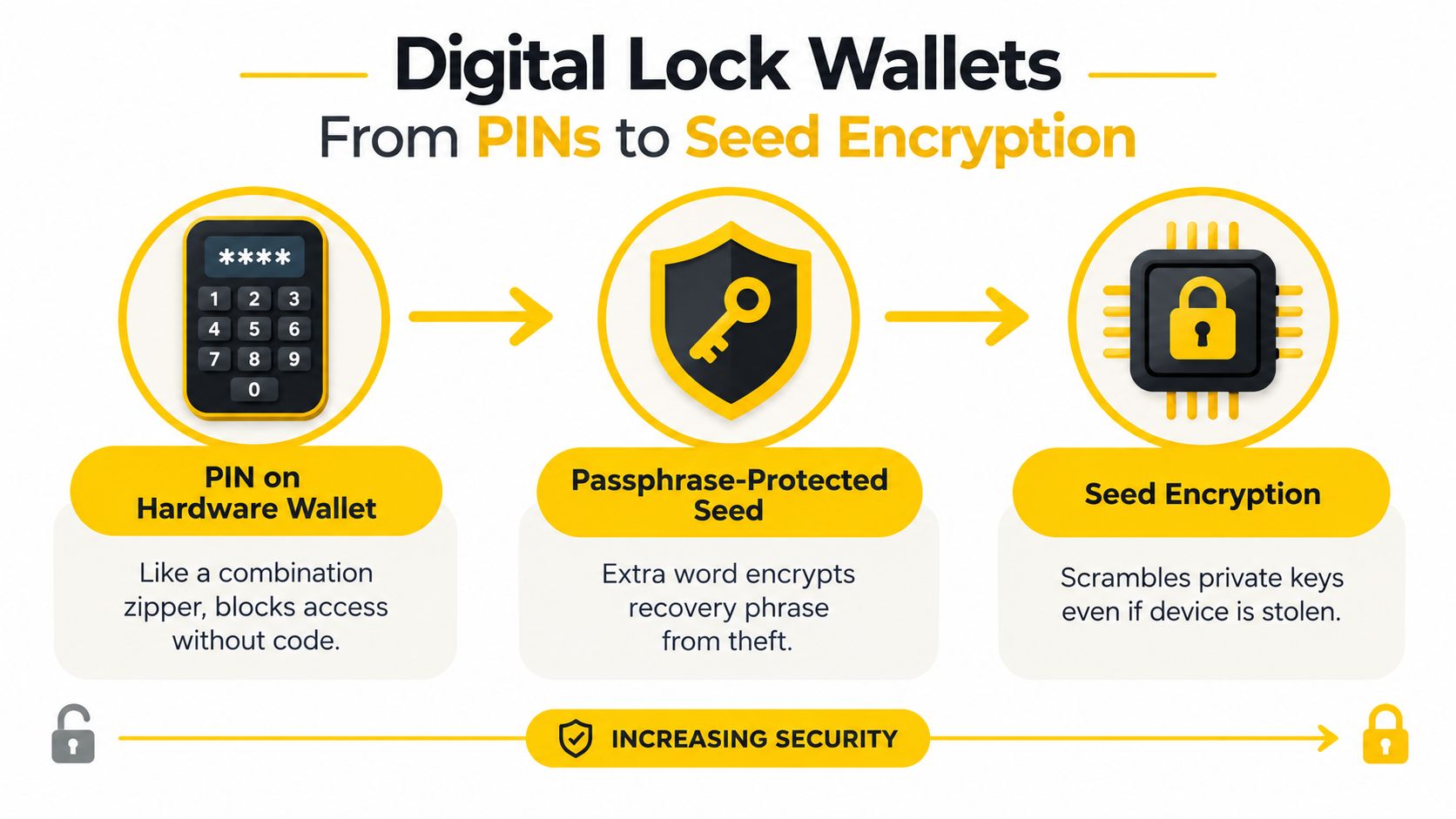
The cryptocurrency wallet security guide is a useful companion when turning these concepts into operational habits. The central lesson is simple: a PIN protects device access, a passphrase protects a deeper account layer, and encryption protects stored secrets. Each control addresses a different failure path.
Physical Versus Digital Lock Wallets Compared
A zip-around travel wallet and a PIN-protected hardware wallet may look incomparable, but both create a barrier between an unauthorized person and something valuable. Their recovery stories are where the difference becomes decisive.
If a physical wallet disappears, the cards and cash inside may be gone. You can cancel or replace some payment instruments, but the loss still creates immediate disruption. If a hardware wallet disappears, the device can often be replaced and the wallet restored, provided the recovery material remains private, complete, and usable.
That advantage also creates a larger responsibility. A physical lock mainly protects objects during a short encounter. A digital lock must protect signing authority over time, including against remote manipulation and careless recovery.
| Dimension | Physical Lock Wallet | Digital Lock Wallet |
|---|---|---|
| Main asset | Cards, cash, identity documents, keys | Private keys and transaction approval |
| Typical barrier | Zipper, clasp, padlock, or dial | PIN, passphrase, encryption, or multiple signatures |
| Common failure | Broken zipper, damaged clasp, forgotten code | Weak authentication, lost recovery data, compromised firmware |
| Recovery | Replace or cancel some contents | Restore from a verified recovery backup |
| Daily friction | Opening hardware compartments | Entering credentials and verifying transactions |
| Attack surface | Bag access, cutting, rummaging, radio reading | Malware, phishing, device theft, firmware, social engineering |
A physical wallet rewards fast access when you're paying or showing identification. A hardware wallet rewards deliberate access because each approval deserves inspection. Cold storage wallet guidance helps clarify why offline custody changes the recovery and exposure model rather than adding a stronger “lock.”
Neither product category wins in every setting. The better choice depends on whether the likely attacker is beside you in a crowd or far away trying to obtain a secret.
Matching Lock Wallets to Travelers, Everyday Users, and Crypto Holders
The best lock is the one that answers your actual exposure without making normal use so difficult that you bypass it.
Frequent travelers
A frequent traveler faces crowded platforms, airport queues, shared rooms, and unfamiliar routines. An RFID-blocking card section paired with a locking zipper or clip fits that environment because it addresses both contactless reading and quick physical access.
Keep the high-consequence items in the protected compartment, but don't turn the wallet into a vault you must open constantly. Carry one payment card separately for low-risk daily purchases, and keep backup documents concealed rather than placing everything behind one closure.
Everyday users
For someone whose wallet spends most of its time in a pocket or work bag, a modest clip, zip closure, or small interior compartment is usually more practical. Optional RFID sleeves can address contactless concerns without forcing every transaction through a complicated mechanism.
Daily security fails when the owner stops using the feature. A closure that catches on clothing, a code that's hard to recall, or a compartment that slows every checkout may encourage careless habits. Choose protection you'll operate consistently.
Crypto holders
Crypto holders face a different combination of risks: malicious software, deceptive transaction requests, stolen devices, exposed recovery phrases, and personal compromise. A hardware wallet with a PIN and passphrase can separate device access from deeper account access. Multisignature arrangements may suit larger or shared holdings, but they require careful key distribution and recovery testing.
A paper backup can still be part of the recovery plan, but it must be treated as sensitive information rather than ordinary stationery. The paper wallet template can help organize a written backup process, provided you create and store it in a controlled environment.
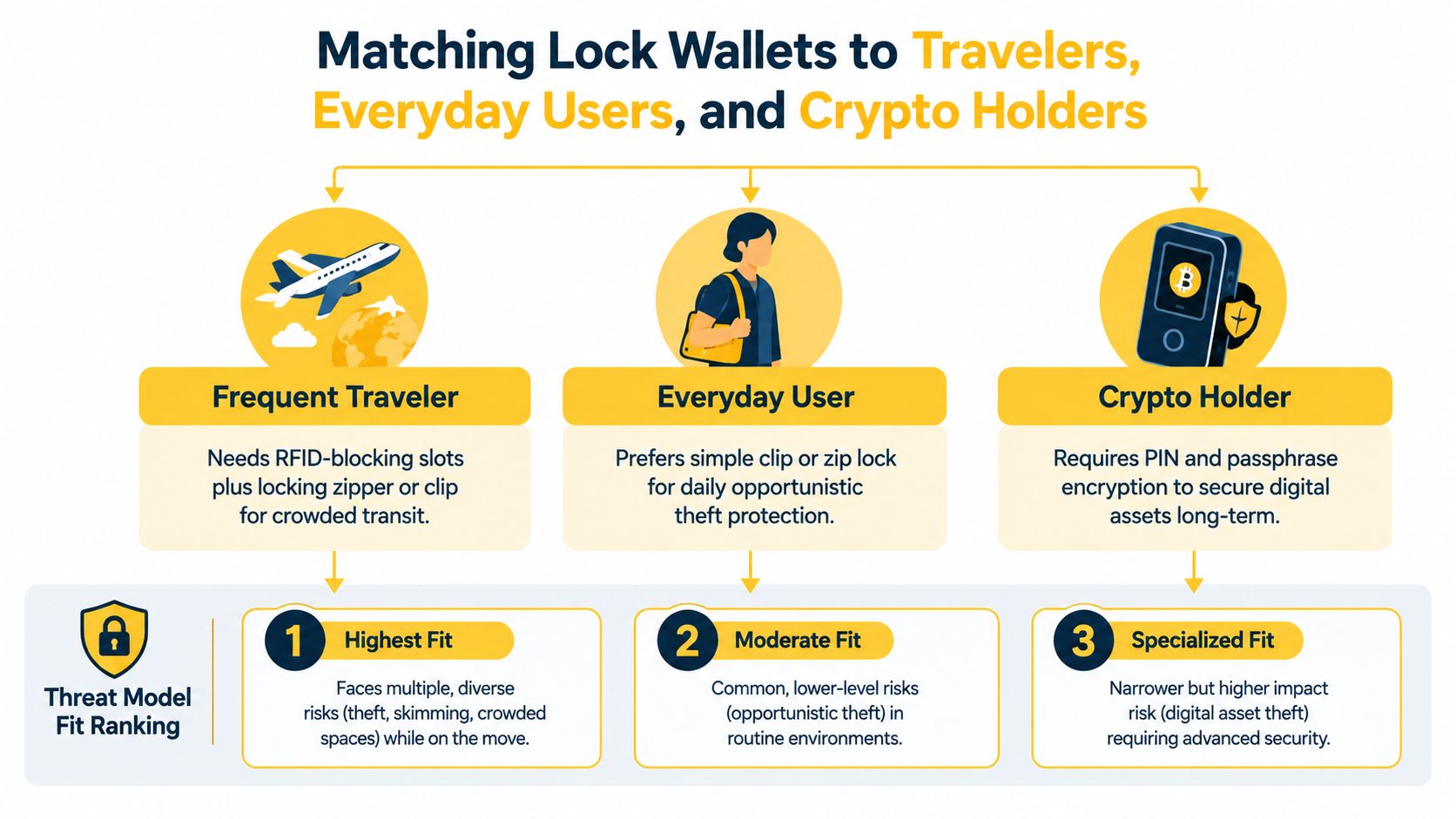
The same principle ties these profiles together. Add a mechanism when it covers a named threat, not because another lock sounds reassuring.
Maintenance and Habits That Keep Lock Wallets Effective
Locks degrade. A combination dial can stiffen as lint enters the mechanism, a zipper can lose alignment, and a clip spring can weaken after repeated bending. Test the wallet before a trip, not when you're standing at a hotel desk with an urgent need to reach a passport.
Use a small routine:
- Rotate physical codes: Change a combination periodically, avoid reusing an old sequence, and store the recovery instruction somewhere separate from the wallet.
- Clean moving parts: Brush zipper tracks gently, remove grit, and use only a suitable silicone-based product when the manufacturer permits lubrication.
- Test closures under load: Fill the wallet as you normally would, then check whether the zipper, clasp, and compartment still close and release smoothly.
- Maintain hardware devices: Charge a hardware wallet before extended storage, inspect its port and cable, and keep backup batteries seated correctly in any accessory that uses them.
- Verify updates: Install firmware only after checking the manufacturer's signed release information and verifying the package through the supported process.
- Rehearse recovery: Restore a test wallet before a real loss forces you to discover that a phrase is incomplete, unreadable, or paired with the wrong passphrase.
OpenWallet Foundation guidance identifies auto-lock after lost focus, inactivity auto-lock, blanked mobile thumbnails, and removal of authentication secrets from memory as a minimum lock baseline for safe wallets. Its wallet safety guide is especially relevant to digital products used on shared or easily misplaced devices.
Independent wallet-security review standards also recommend manual lock support, the strongest available device authentication, passphrases that favor length over mere complexity, and an auto-lock default of no more than 15 minutes. The Coinspect verification standard explains why these controls reduce the time available for unauthorized DApp actions and forgotten sessions.
Why More Locks Is Not Always More Security
A wallet with a combination zipper, RFID shell, exterior clip, and locked coin pouch may resist several forms of casual access. It can also leave the owner unable to reach cash after forgetting one code, breaking one latch, or losing one tiny key.
Digital layers create the same tension. PINs, passphrases, multisignature approval, and timelocks can reduce single-point failures, but each adds setup and recovery work. A family member who inherits an arrangement may understand none of the steps needed to access it.
The broader secure-wallet market also leaves an important question unanswered. Independent comparison data doesn't rigorously establish whether a lock mechanism reduces real-world theft or shifts risk toward dead batteries, lock failure, and forgotten credentials. Market commentary describes momentum in RFID-blocking and biometric segments, while consumers still weigh convenience, battery life, and low-friction access. This segment analysis is useful context, but it shouldn't be read as proof that one lock type prevents theft.
Practical rule: Choose the fewest independent controls that cover your named risks, then document how you'll recover when one fails.
For a traveler, that may mean a secure inner compartment and an RFID-blocking sleeve. For an everyday user, a reliable closure may be enough. For a crypto holder, a PIN, protected recovery process, and carefully tested additional layer may be more appropriate than a complicated system no one can restore.
Cascoin offers a downloadable Core Wallet for Windows, macOS, and Linux, alongside documentation on wallet security, cold storage, private-key handling, and QR codes. Visit Cascoin to review its open-source wallet resources and choose a setup whose security and recovery steps you can maintain.